



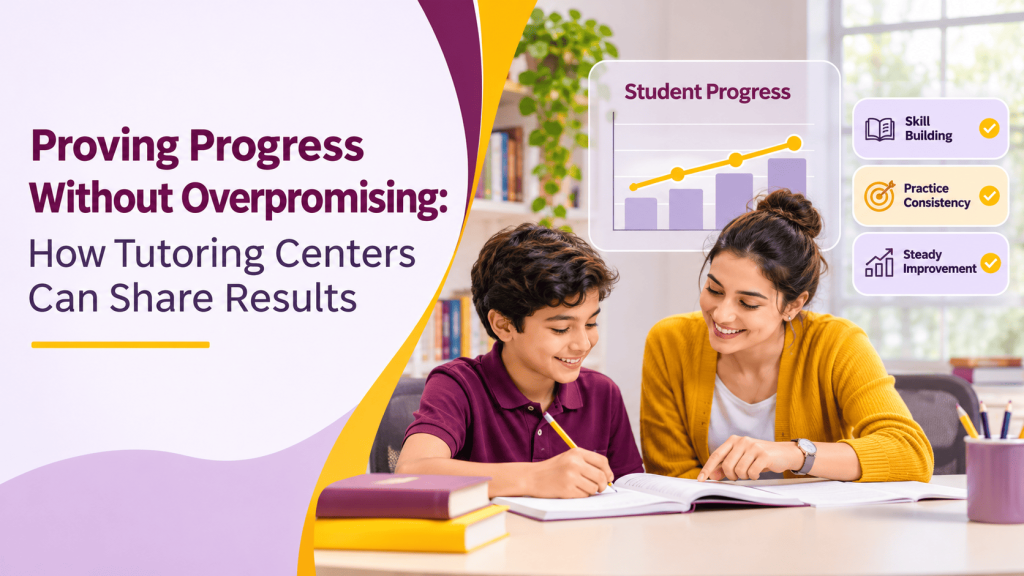
Parents considering tutoring want to know one thing above all: will it help my child? Tutoring centers naturally want to share success stories, test score gains, and glowing testimonials. But exaggerated claims, cherry-picked results, or privacy slips can damage trust quickly.
Sharing results honestly is both more ethical and more persuasive over time.
Describe Progress in Realistic Terms
Instead of promising specific score increases, explain how you measure progress: initial assessments, regular check-ins, and progress reports shared with parents. If you share aggregate results, such as average improvement on practice tests, explain how the numbers were calculated and which students were included.
Avoid implying that every student will achieve the best outcomes you have seen. Progress depends on the student, attendance, effort, and starting point.
Clear explanations of your methods often reassure parents more than bold numbers.
Parents also appreciate seeing how progress is communicated during the program, not just at the end. Sample progress reports with names removed, or a description of what a monthly parent update includes, show that you track growth carefully and keep families involved. Regular communication often matters as much to parents as the final results.
Protect Student Privacy
Never publish a student’s name, photo, grades, or scores without written parent permission, and think carefully even with permission. Many families prefer anonymous testimonials, such as “parent of a ninth grader.” Store student records securely and limit who can access them.
Testimonials should be genuine and represent typical experiences. Federal rules on endorsements apply, so avoid presenting unusual results as the norm.
Education providers listed in the Education and Colleges category on Location Business Listings can describe their approach, subjects, and grade levels there, helping parents compare options on substance rather than slogans.
Show Your Teaching Team
Parents want to know who will work with their child. Share tutor qualifications, subject expertise, background check practices, and training. A short introduction to each tutor builds confidence.
Offer a trial session or initial assessment so families can judge fit before committing.
Conclusion
Tutoring centers earn parents’ trust by being honest about how progress happens and careful with student information. Explain your methods, share results responsibly, protect privacy, and introduce your team. Accurate, thoughtful listings on your website, Google profile, and directories like Location Business Listings help families find support they can trust.
Frequently Asked Questions
Can tutoring centers guarantee better grades?
Guarantees are risky because results depend on many factors, including attendance, effort, and school curriculum. Some centers offer satisfaction policies instead. Focus on describing your methods and how you track progress.
Is it okay to post student test results online?
Only with written parent permission, and many families prefer anonymity. Aggregate data, such as average improvement across students, can be shared without identifying anyone, as long as you explain how it was calculated.
What qualifications should tutors have?
Look for subject expertise, teaching experience, and training in working with students of the relevant age. Many centers also conduct background checks. Share these qualifications openly so parents can make informed choices.
How can tutoring centers collect honest testimonials?
Ask parents for feedback after a meaningful period, such as the end of a term. Use their words accurately, with permission, and remove identifying details if they prefer. Avoid editing testimonials in ways that change their meaning.