



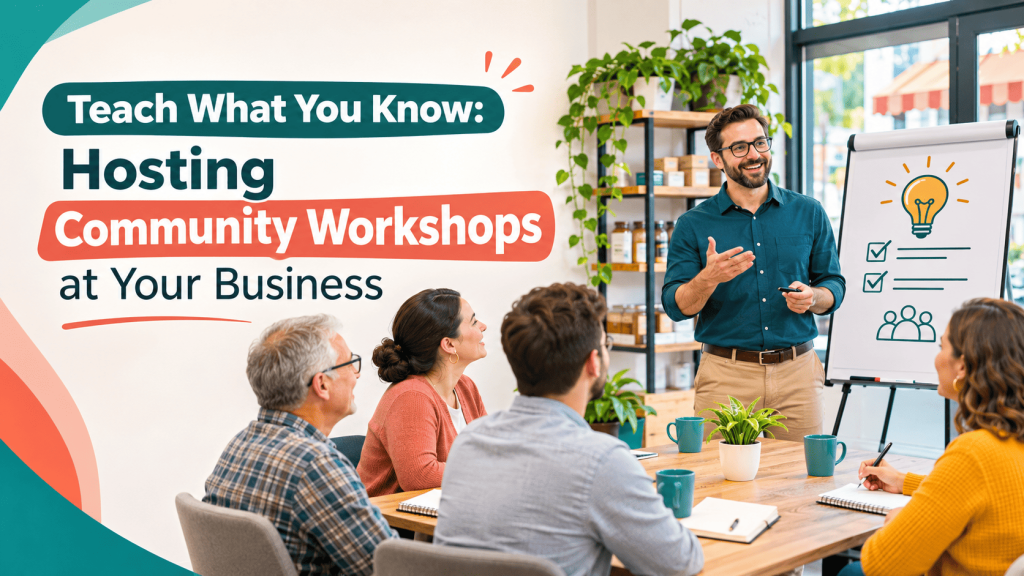
A hardware store hosts a Saturday class on fixing a leaky faucet. A bakery teaches kids to decorate cookies. A financial planner runs an evening session on budgeting basics at the public library. None of these events is a sales pitch, yet each one introduces dozens of neighbors to a local business in a memorable, friendly way.
Community workshops turn your expertise into goodwill. They are one of the most personal ways to build local recognition.
Choose a Topic People Actually Want
The best workshop topics solve a common problem or teach a satisfying skill connected to your business. Think about the questions customers ask most often. A garden center might teach container gardening for apartment balconies. A bike shop could cover basic roadside repairs. A pet store might host a session on introducing a new puppy to the household.
Keep the focus on teaching. If attendees feel they are being sold to, they will not come back, and they may not trust your business afterward.
Short sessions of 45 to 90 minutes work well for most audiences, with time at the end for questions.
Promote the Event Where Neighbors Look
Create a simple event page on your website with the date, time, location, cost, and registration link. Share it on your Google Business Profile, social channels, email list, and community calendars run by libraries, local newspapers, and neighborhood associations. Many of these calendars are free.
Partnering with a library, school, or community center can expand your reach and give you a larger venue if your space is small.
Community organizations and civic groups listed in the Community category on Location Business Listings can be helpful partners, since many host events and share local happenings with their members.
Follow Up and Build on It
Collect email addresses from attendees who want to hear about future sessions, and send a short thank-you with helpful resources from the workshop. Share photos on social media with permission, and mention the next scheduled event.
Track which topics draw the biggest crowds and generate follow-up visits. Over time, a regular workshop series can become something your community looks forward to and associates with your business.
Conclusion
Workshops give neighbors a low-pressure way to meet your team and see your expertise firsthand. Choose useful topics, promote them through local channels, and follow up thoughtfully. Keeping your business details accurate on your website, Google profile, and directories such as Location Business Listings helps new contacts find you again when they need what you offer.
Frequently Asked Questions
Should community workshops be free?
Free workshops attract the widest audience and build goodwill. Some businesses charge a small fee to cover materials or reduce no-shows. If you charge, keep it modest and explain what it covers, so the event still feels community-focused rather than commercial.
How many people should I plan for at a workshop?
Start small, with 10 to 20 attendees, so everyone can participate and ask questions. Require registration to estimate attendance. As interest grows, you can offer multiple sessions or partner with a larger venue.
Can I promote my products at a workshop?
A brief mention of relevant products or services is fine, especially if attendees ask. Keep the session focused on teaching. You can offer a small discount or follow-up consultation at the end without turning the workshop into a sales presentation.
Where can I list a community workshop online?
Post it on your website and Google Business Profile, share it on social media, and submit it to free community calendars run by libraries, local news outlets, chambers of commerce, and neighborhood groups. Submit early to meet calendar deadlines.